
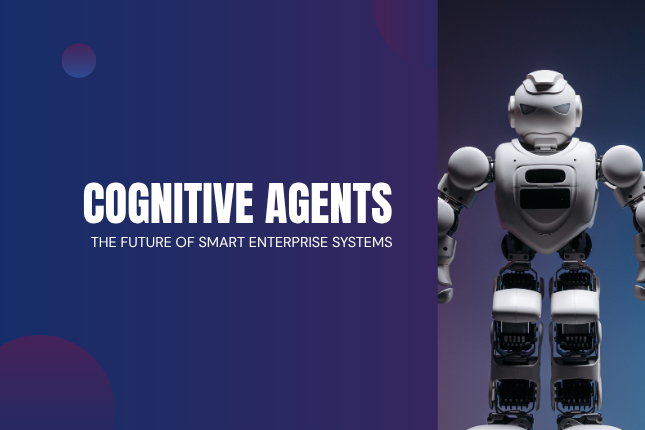
Cognitive Agents support enterprise decisions across departments today. These systems process large data sets in real time. They spot patterns humans often miss. Businesses gain speed and accuracy through these intelligent tools. Leaders use these systems to guide strategies. Operations run smoother with fewer delays.
Fundamentals of Cognitive Agents
Cognitive Agents act as intelligent cores in business systems. They handle tasks from data analysis to customer support. Engineers build these agents with machine learning models. The models predict outcomes based on past events and live inputs. Users track results through dashboards that update instantly.
Core building blocks
Developers structure Cognitive Agents in layers. Input layers gather data from sensors and databases. Processing layers apply rules and models to interpret information. Output layers send actions to enterprise workflows. This layered stack mirrors key elements of human reasoning. Teams test each layer for reliability before full deployment.
Decision-making processes
Cognitive Agents evaluate options quickly. They score choices against goals set by managers. High scores trigger automatic actions, such as rerouting shipments. Low scores generate alerts for human review. This approach reduces delays across supply chains. Factories adjust production schedules with real-time data.
Cognitive computing in enterprise environments
Cognitive computing forms the foundation for these agents. It processes unstructured data such as emails, messages, and voice notes. Algorithms extract key details from this data. Managers use these insights for daily decisions. The system adapts to new data types with minimal reconfiguration.
Data handling techniques
Teams feed diverse inputs into cognitive computing engines. Natural language tools analyze text for intent and sentiment. Image recognition scans documents for important details. These methods combine to create a complete view of operations. Supervisors act on insights drawn from multiple channels.
Pattern recognition methods
Cognitive Agents detect repeated behaviors and trends. They flag unusual spikes in sales. Algorithms group related events into clusters. These clusters help predict inventory needs. Warehouses restock based on these patterns. Errors decline as data-driven restocking replaces manual guesswork.
AI and cognitive computing synergies
AI and cognitive computing work together in cognitive agent designs. AI contributes learning and adaptation. Cognitive computing adds interpretation and reasoning. This combination solves complex business problems. Finance teams track fraud patterns faster with these systems. Reports reach auditors with fewer gaps.
Learning algorithms at work
Developers train models on historical and live datasets. The models adjust internal weights for better accuracy. Performance improves over time without constant manual tuning. Banks apply these models to loan approvals. Approvals speed up while risk controls remain strict.
Reasoning engines explained
Reasoning engines connect facts to outcomes. They link causes to effects behind market shifts. Traders use these insights for faster decisions. Actions stay aligned with company rules and policies.
AI cognitive computing applications
AI cognitive computing drives targeted enterprise functions. It powers chat systems that respond instantly. Customers receive support without long waits. Support teams focus on complex issues instead of routine queries.
Customer service deployments
Cognitive Agents classify tickets automatically. They route issues to the right teams. Responses draw from knowledge bases with high accuracy. Satisfaction levels remain steady as automation increases. Call centers cover more customers with fewer delays.
Operational efficiency gains
In operations, AI cognitive computing schedules predictive maintenance. Sensors track equipment wear in real time. The system books repairs before failures occur. Downtime drops across plants. Production lines run efficiently with fewer disruptions.
Integration strategies for Cognitive Agents
Businesses integrate Cognitive Agents into existing tech stacks. APIs connect them with ERP systems and other applications. Data flows both ways for complete visibility. IT teams map all connections during setup phases. Rollouts occur in stages to ensure stability.
Compatibility with legacy systems
Legacy databases connect through middleware tools. Cognitive Agents read older formats without data loss. Updates sync smoothly across platforms. Companies retain core systems while adding intelligent capabilities.
Security measures in place
Teams secure agent communication with end-to-end encryption. Access controls limit data visibility by role. Audit logs record every agent action. Compliance stays intact while agents operate across departments.
Benefits across business units
Cognitive Agents improve performance in sales teams. They forecast demand using order histories. Reps focus on leads with high potential. Close rates improve as insights match customer needs.
Sales and marketing shifts
Marketing teams segment audiences with greater precision. Campaigns launch based on behavior profiles. Engagement rises with targeted messages. Budgets stretch further with reduced waste.
Human resources advancements
HR teams use Cognitive Agents for talent matching. Profiles align skills with open roles. Interviews schedule automatically. Hiring cycles shorten with better candidate fits.
Finance
- Agents detect irregular transactions instantly.
- Budget forecasts improve with adaptive models.
- Reporting cycles shorten with automated consolidation.
Operations
- Inventory levels adjust based on real demand.
- Logistics teams reduce errors with automated routing.
- Production bottlenecks surface before disruptions occur.
Customer support
- Cognitive agents predict peak traffic periods.
- Ticket response times fall across all channels.
- Customer satisfaction climbs with consistent service quality.
IT & Security
- Agents monitor system health proactively.
- Threat detection improves through anomaly spotting.
- Compliance checks run continuously without manual oversight.
Overcoming implementation hurdles
Companies face data quality challenges early on. Cognitive Agents require clean inputs for reliable outputs. Cleansing tools remove duplicates and errors. Quality checks continue throughout system use.
Training and adoption steps
Staff learn interfaces through short training sessions. Hands-on practice builds confidence. Usage metrics identify training gaps. Adoption grows as teams see early success.
Cost management tactics
Budgets cover initial development and integration. Open-source tools help reduce licensing costs. Efficiency gains offset early expenses. CFOs approve expansions after successful pilots.
Measuring agent effectiveness
Dashboards track key performance indicators. Response times remain in seconds. Accuracy metrics meet targets set each quarter. Reviews adjust goals as systems mature.
Key performance indicators
Teams select KPIs such as error rates and speed gains. Agents meet these targets or trigger scheduled adjustments. Monthly reports go to leadership for review.
Continuous improvement loops
Feedback loops refine agent models using real-world data. Systems improve decisions as conditions change. Gains accumulate with each cycle.
Enterprises use Cognitive Agents to strengthen operations today. These systems process, decide, and act with precision. Sales, operations, and support teams benefit from clearer insights. Integration paths address technical challenges step by step. Continuous measurement keeps progress aligned with business goals.For deeper dives, check the real-world impact of cognitive agents in enterprises. See how Novatalk is scaling cognitive automation.
Cognitive agents are intelligent software systems that process large data sets, make decisions, and support business activities in real time. They analyze information, learn from patterns, and provide insights to improve operations.
They reduce delays, automate routine decisions, enhance accuracy, and provide instant insights. This leads to faster problem-solving, fewer errors, better workflows, and smoother operations across departments.
Manufacturing, finance, logistics, retail, customer service, HR, IT operations, and supply chain management see strong gains due to data-driven decisions, automated routing, forecasting, and predictive maintenance.
Traditional chatbots follow fixed rules and predefined responses. Cognitive agents analyze context, learn from data, reason through problems, and act autonomously across business systems—not just in conversations.